What to Bring to Korea from America: 12 Essentials for 2026
Korea's retail infrastructure is excellent, and most toiletries, clothing and everyday items are cheaper and easier to buy after you land than to pack from home. That said, a handful of American products are genuinely difficult to find or significantly more expensive in Korea, and bringing them saves real hassle. The items that matter most are adapter plugs, prescription medications with documentation, your own deodorant if you prefer stick or spray formulas, a backup credit card, and a small amount of U.S. cash for the airport exchange counter. This guide identifies exactly what is worth the suitcase space, what Korea supplies better than America, and what administrative documents and financial tools you actually need to bring before you board.

- Voltage and plug type
- Korea uses 220V, Type C/F round-pin outlets. Bring a plug adapter; most phone and laptop chargers handle dual voltage.
- Prescription medications
- Allowed for personal use (up to three months' supply); bring original packaging, prescription label and doctor's letter in English.
- Cash on arrival
- Bring USD 100-200 in small bills to exchange at airport counters; avoid airport ATMs due to poor rates.
- Mobile data options
- U.S. phone plans roam expensively. Buy prepaid eSIM or physical SIM on arrival at airport booths; prices vary by carrier and data.
- Deodorant availability
- Korean stores stock mostly roll-on and mild formulas. Bring stick or clinical-strength deodorant from home if preferred.
- Entry documents 2026
- U.S., Canadian, UK and 19 other nationals are K-ETA exempt until 31 Dec 2026; submit e-Arrival Card online within 3 days before arrival instead.
- Adapter plugs and electronic chargers
- Prescription medications and medical documentation
- Deodorant and personal care products
- Credit cards, debit cards and cash
- Mobile phone plan and eSIM options
- Documents and confirmations to print or save offline
- What not to bring because Korea stocks it better
- Essential items to bring versus what to buy in Korea
- Practical tips
- Frequently asked questions
Adapter plugs and electronic chargers
Korea uses 220-volt electricity and Type C or Type F round-pin outlets—the same two-pin round shape used across continental Europe. American flat-blade plugs will not fit. You need at least one plug adapter, and two is better if you plan to charge a phone and laptop simultaneously in a hotel room. Buy the adapter before you leave; airport electronics shops in Korea stock them, but they are marked up and you will want to charge devices as soon as you check in. Most modern phone chargers, laptop power bricks, electric toothbrushes and camera battery chargers are dual-voltage (110-240V) and will work fine with just the adapter. Check the small print on the power brick; if it says 'INPUT: 100-240V' you only need the plug adapter, not a voltage converter. Hair dryers, curling irons and other heat-styling tools are often single-voltage, and a cheap converter will not safely handle the wattage. Leave those at home and either use the wall-mounted dryer provided in most Korean hotel bathrooms or buy a cheap dual-voltage travel dryer in Korea if you need one. USB charging ports are increasingly common in hotels and cafes, but bring your own USB cables and wall adapters; do not assume the hotel will have the right cable for your device.
Prescription medications and medical documentation
Korea allows travelers to bring prescription medications for personal use, generally defined as up to a three-month supply. You must bring the medication in its original packaging with the pharmacy label showing your name, the prescribing doctor's name, the drug name and dosage instructions. If the label has worn off or you use a pill organizer, bring a copy of the prescription or a signed letter from your doctor on letterhead describing the medication, dosage and the condition it treats. The letter should be in English; Korean customs and airport health officers can read English documentation. Controlled substances—including ADHD medications, sleep aids and some pain relievers—require extra scrutiny. For these, a doctor's letter is not optional; bring it even if the pharmacy label is intact. If you are bringing more than a small personal supply or the medication is an injectable, declare it on your e-Arrival Card customs form and be prepared to show documentation at the customs desk. Over-the-counter medications like ibuprofen, allergy pills, antacids and cold medicine are widely available at Korean pharmacies and convenience stores, often under familiar brand names or local equivalents, so there is no need to pack a large stockpile. That said, if you have a preferred formulation or dose that works for you—such as a specific extended-release allergy tablet—bring a travel supply, because the exact product may not be stocked or may have a different active-ingredient dose in Korea. Contact lens solution, bandages, motion-sickness tablets and basic first-aid supplies are sold everywhere in Korea and are not worth the luggage weight.

Deodorant and personal care products
Deodorant is the single toiletry item American travelers consistently wish they had packed more of. Korean stores—including large drugstores and supermarkets—stock deodorant, but the selection leans heavily toward roll-on liquids and mild, lightly scented formulas. Stick deodorants, clinical-strength antiperspirants and unscented varieties are harder to find, and when available they are often imported and expensive. If you have a preferred brand or formula, especially if you need strong odor or sweat protection during summer, bring a stick or two from home. One standard-size stick usually lasts two to three weeks of daily use. Beyond deodorant, almost everything else is easier to buy in Korea than to pack. Shampoo, conditioner, body wash, toothpaste, razors, sunscreen, makeup and skincare products are available at every convenience store, supermarket and pharmacy, often at lower prices than in the U.S. Korean sunscreen in particular is highly regarded and inexpensive, so there is no reason to bring a large bottle from home. If you use a specific prescription skincare product, bring that; for everything else, plan to shop locally. Tampons and pads are sold at all convenience stores and supermarkets, though the range of absorbency levels and sizes can be narrower than in American drugstores. If you have a strong preference for a particular product, bring a cycle's worth and restock at a larger store like Olive Young, a national health-and-beauty chain with English signage in most branches.
Credit cards, debit cards and cash
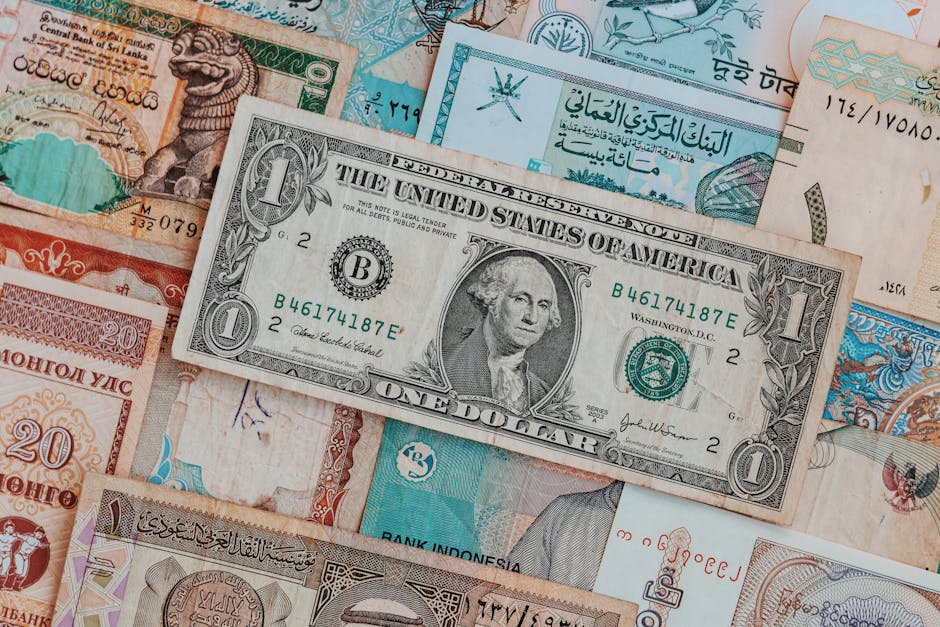
Bring at least two different credit or debit cards, ideally from different payment networks (one Visa, one Mastercard) and keep them in separate places. Korea is highly card-friendly—more so than the United States in many respects—and contactless payment is ubiquitous, but U.S.-issued magnetic-stripe cards occasionally fail at older terminals or unstaffed kiosks. Chip-and-PIN cards work more reliably than chip-and-signature, though most terminals will accept either. Before you leave, call or message your card issuer to set a travel notification; fraud-detection algorithms often block overseas transactions if the issuer has not been told you are traveling, and it is difficult to resolve that from Korea if you do not have a working U.S. phone number. Check the foreign-transaction fee on each card; many U.S. credit cards charge 2-3 percent, which adds up quickly. A handful of travel-focused cards charge zero foreign-transaction fees, and those are worth applying for before your trip if you have time. Also bring a small amount of U.S. cash—100 to 200 dollars in fives, tens and twenties—to exchange at the airport when you land. The exchange booths in the arrivals hall at Incheon International Airport are open 24 hours, offer decent rates compared to U.S. airport exchanges, and give you immediate Korean won for your taxi, bus or convenience-store stop before you reach your hotel. Do not exchange all your travel money at the airport; rates at local banks and currency-exchange booths in central Seoul (especially around Myeongdong) are often slightly better, and you can top up as needed. Avoid using airport ATMs for cash withdrawal on arrival; the exchange rate and withdrawal fees are usually worse than the staffed exchange counter. Once you have Korean won, you will rarely need large amounts of cash; even street-food vendors, taxis and small shops accept cards. But cash is still useful for traditional markets, some older restaurants and temple donation boxes.
Mobile phone plan and eSIM options
Do not rely on your U.S. carrier's international roaming unless you have confirmed the daily rate and data limits in writing. Most American phone plans charge high per-day roaming fees in Korea—often 10 to 15 dollars per day—and throttle data after a small threshold, leaving you with slow speeds for maps and translation apps exactly when you need them most. The better option is to buy a prepaid Korean SIM card or eSIM for data. If your phone is unlocked and eSIM-capable (most iPhones from the XR onward and recent Samsung Galaxy models support eSIM), you can purchase and activate a Korean data plan online before you leave or immediately upon landing. Providers such as KT, SK Telecom and LG U+ sell prepaid tourist data plans; prices vary but expect to pay roughly 30,000 to 50,000 KRW for 10 to 30 days of data depending on the allowance and carrier, though you must confirm current pricing on the provider's site as it changes. If your phone is not eSIM-compatible or you prefer a physical SIM, booths in the arrivals hall at Incheon and Gimpo airports sell prepaid tourist SIM cards with similar data allowances; staff speak English and can install and activate the SIM on the spot. Bring your passport; it is required to register the SIM under Korean telecom regulations. Make sure your phone is unlocked before you leave the U.S.; if it is still locked to your carrier, contact them at least a week before departure to request an unlock. Once you have Korean mobile data, download Naver Map (네이버 지도) and KakaoMap (카카오맵) before you start navigating. Google Maps works for transit directions in Korea, but it does not provide walking or driving directions because of Korean mapping-data export restrictions. Naver Map and KakaoMap both have English-language interfaces, show real-time bus and subway arrivals, and provide turn-by-turn walking directions that actually work.
Documents and confirmations to print or save offline
You are required to complete the Korea e-Arrival Card online within three days before your flight if you are a U.S., Canadian, UK, German, French, Italian, Dutch, Spanish, Polish, Swedish, Finnish, Norwegian, Belgian, Danish, Austrian, Japanese, Taiwanese, Hong Kong, Macao, Singaporean, Australian or New Zealand national traveling in 2026. These 22 countries are temporarily exempt from the K-ETA requirement from 1 January to 31 December 2026, which means the e-Arrival Card is the form you actually need to file. Submit it at e-arrivalcard.go.kr; the system will email a confirmation code. Save a screenshot of the confirmation page and email it to yourself. Immigration officers at Incheon usually pull up your record automatically by scanning your passport, but a saved confirmation speeds up the process if there is a system glitch. Do not assume the exemption applies to every Western passport; the list is exact, and if your nationality is not named above—including Ireland, Portugal, Switzerland, Greece and the Czech Republic—you must apply for K-ETA at k-eta.go.kr instead and pay the application fee. Always verify your own nationality's requirements on the official K-ETA site before you travel, because the exemption is temporary and the list does not cover all European or Western countries. Beyond entry documents, print or save offline copies of your hotel confirmations, flight itinerary, travel insurance policy and any pre-booked train or tour tickets. cellular data is not guaranteed in subway stations or rural areas, and showing a printed hotel address in Hangul to a taxi driver is far easier than trying to spell it aloud.

What not to bring because Korea stocks it better
Korea's convenience stores—CU, GS25, 7-Eleven and Emart24—are everywhere, open 24 hours, and stock a far wider range of useful goods than American equivalents. Do not pack bulky items like bottled water, snacks, instant coffee, tissues, wet wipes, hand sanitizer, umbrellas or basic cold medicine; you will find all of them within a five-minute walk of any subway station or hotel for less than you would pay at a U.S. drugstore. Korean便利stores also sell cheap phone chargers, adapters, socks, T-shirts, laundry detergent pods, Band-Aids and reading glasses, so there is no need to pack backups of everyday items that might break or run out. Skincare, cosmetics and sheet masks are a major category in Korea; brands like Innisfree, The Face Shop, Etude House and Olive Young house brands are high-quality and inexpensive, so save the suitcase space and buy them locally if you want to try Korean beauty products. The same applies to socks, undergarments and basic clothing; Uniqlo, Muji, Daiso and local brands have branches in every Seoul neighborhood and prices are often lower than in the U.S. If you forget to pack something or a zipper breaks, you can replace it cheaply and quickly without hauling it across the Pacific. The one category where Korea's availability is spottier is plus-size and tall-size clothing and shoes; if you wear above a U.S. men's size 11 shoe or women's size 10, or wear XL-and-up clothing, Korean stores may not stock your size consistently, so bring what you need from home rather than counting on finding it locally.

Essential items to bring versus what to buy in Korea
| Item | Bring from U.S. | Buy in Korea | Notes |
|---|---|---|---|
| Plug adapter (Type C/F) | Yes | Available but marked up | Need immediately on arrival; buy before you fly |
| Prescription meds | Yes, with documentation | Not available OTC | Bring 3-month supply, original packaging and doctor's letter |
| Deodorant (stick/spray) | Yes if preferred | Limited selection | Korean stores stock mostly roll-on; bring clinical-strength if needed |
| Credit cards (2+) | Yes, from different networks | — | Notify issuer of travel; check foreign-transaction fees |
| U.S. cash (small bills) | USD 100-200 | — | Exchange at airport arrival for immediate won; better rates than ATM |
| Mobile data SIM/eSIM | Order online or buy at airport | Prepaid SIM at airport | Cheaper and faster than U.S. roaming; confirm phone is unlocked |
Practical tips
Frequently asked questions
Before you go
The core rule is simple: bring what Korea does not stock well or at all—adapter plugs, your prescription medications with proper documentation, preferred deodorant, two working credit cards, a bit of U.S. cash for airport exchange, and a plan for mobile data. Everything else, from toiletries to snacks to extra clothing, is easier and cheaper to buy after you land. Print or save your e-Arrival Card confirmation and hotel details offline, confirm your phone is unlocked, and notify your bank you are traveling. Pack light, bring backups of the essentials that matter, and save your suitcase space for what you will bring home.
Taking a break from trip planning? Try a free 2-minute personality quiz at Quirkly.


Comments
Post a Comment