What to Wear in Korea Late October: 7-Day Packing Guide
The last week of October in South Korea sits at the transition between comfortable autumn and the edge of winter, with daytime highs around 15-18°C and nighttime lows dropping to 8-12°C. You will need layers that work from cool mornings through warmer midday sun and back to chilly evenings, plus one genuinely warm outer layer for after sunset. Rain is possible but not constant, and indoor heating is strong enough that you will be peeling off jackets in subway cars and restaurants. This guide covers what actually works for a week of sightseeing, what you can skip, how Korean autumn fashion runs compared to Western norms, and the specific clothing mistakes that leave first-time visitors either sweating on the metro or shivering at palace gates after 5pm.

- Daytime temperature
- 15-18°C (59-64°F), comfortable for walking with a light jacket or cardigan
- Morning and evening
- 8-12°C (46-54°F), requires a warmer coat or layered fleece from early morning and after sunset
- Rain likelihood
- Occasional light rain or drizzle; pack a compact umbrella or light rain jacket
- Indoor heating
- Subway, cafes, and malls are heated; you will remove outer layers frequently
- Walking volume
- Expect 12,000-20,000 steps daily; comfortable, broken-in shoes are non-negotiable
- Shoe etiquette
- Remove shoes at guesthouses, some restaurants, temples, and fitting rooms; wear slip-on friendly footwear
- Temperature and weather patterns in late October
- Core clothing pieces that cover most situations
- Footwear for long walking days and shoe removal culture
- How local fashion runs and what stands out as foreign
- Rain gear and what to do about umbrellas
- What you can skip and common overpacking mistakes
- Practical items that make the week easier
- Sample one-week packing list for late October in South Korea
- Practical tips
- Frequently asked questions
Temperature and weather patterns in late October
Late October marks the latter half of autumn in South Korea, when the intense heat and humidity of summer are entirely gone and the reliable cold of winter has not yet settled in. Daytime highs in Seoul, Busan, and other major cities typically range from 15-18°C, warm enough that you will be comfortable in a long-sleeve shirt and light jacket while walking outside in the sun. Mornings before 9am and evenings after 6pm drop to 8-12°C, and the sun sets around 5:45-6pm, which means your evening plans will happen in noticeably cooler air.
Rain is less frequent than in summer but still possible, usually arriving as light drizzle or short showers rather than the monsoon downpours of July and August. You will not need waterproof trousers or heavy rain gear, but a compact folding umbrella or a packable rain jacket is worthwhile. Wind is generally light, though it picks up in coastal cities like Busan and on open plazas or riversides in Seoul.
Indoor spaces run warm. Subway cars, department stores, cafes, and restaurants all use heating liberally, and you will find yourself pulling off scarves and unzipping jackets within minutes of stepping inside. The result is constant layering and de-layering, which makes bulky single-piece coats less practical than separates you can tie around your waist or stuff into a daypack. The air is dry compared to summer, so static and chapped lips become minor annoyances; a small lip balm and hand cream are useful additions.
Core clothing pieces that cover most situations
Start with a base of long-sleeve shirts in breathable fabrics like cotton, merino wool, or lightweight synthetic blends. You want something that works alone indoors and under a jacket outdoors. Two or three tops are enough for a week if you are comfortable re-wearing or doing a quick sink wash in your accommodation. Avoid heavy knits that make you sweat on the subway; aim for the weight of a standard business-casual shirt or a thin sweater.
For bottoms, jeans or casual trousers in a medium weight work throughout the day. Lightweight chinos, stretchy travel pants, or dark jeans are all common. Shorts are possible during the warmest part of the afternoon, but you will feel cold as soon as the sun dips, and they are noticeably less common among locals in late October compared to September. If you run warm and plan to spend most of your time walking in direct sun, one pair of knee-length shorts with long trousers for evening is workable, but most visitors find full-length bottoms simpler.
The key outer layer is a medium-weight jacket that blocks wind and provides real warmth without being a winter parka. A fleece jacket, a quilted down jacket, a denim jacket with a liner, or a casual blazer-weight wool coat all fit the range. You will wear this every morning, take it off by midday if the sun is strong, and put it back on by early evening. A second lighter layer—a cardigan, a hoodie, or a zip-up fleece—gives you flexibility for the warmest part of the day and works as an extra insulating layer if you are out late.
A scarf is optional but genuinely useful in the mornings and evenings, especially if you are waiting for buses or walking along the Han River after dark. A lightweight knit or cotton scarf takes almost no space and handles the temperature drop between 6pm and 9pm more comfortably than zipping your jacket to your chin.

Footwear for long walking days and shoe removal culture
You will walk far more than you expect. Even a relaxed sightseeing day in Seoul typically involves 12,000-15,000 steps, and active days exploring markets, palaces, hiking trails, or neighbourhood streets can push past 20,000. Your shoes matter more than any other single clothing item, and blisters or sore arches will ruin days two through seven if you bring the wrong pair.
Comfortable, broken-in walking shoes or trainers are the safest choice. Running shoes, lightweight hikers, or casual leather trainers all work. Avoid brand-new shoes, stiff fashion boots, or anything you have not worn for at least a full day of walking at home. Late October weather does not require waterproof boots, but if rain is forecast, shoes with some water resistance or a quick-dry upper are helpful.
Korea has a strong shoes-off culture. You will remove your shoes at guesthouses, hanok stays, many traditional restaurants, temple halls, some clothing store fitting rooms, and occasional cafes. Slip-on trainers, loafers, or shoes with easy laces make this far less tedious than high-top boots with double knots and tucked laces. If you wear orthotics or insoles, make sure they stay attached when you slip your shoes off, or carry them separately.
Sandals are uncommon in late October, even during the day. Locals switch to closed-toe shoes by mid-October, and while no one will stop you wearing sandals, you will feel out of step with the season and cold in the mornings and evenings. If you want a second pair of shoes for indoors or lighter days, packable ballet flats or simple slip-on canvas shoes work better than sandals at this time of year.
How local fashion runs and what stands out as foreign
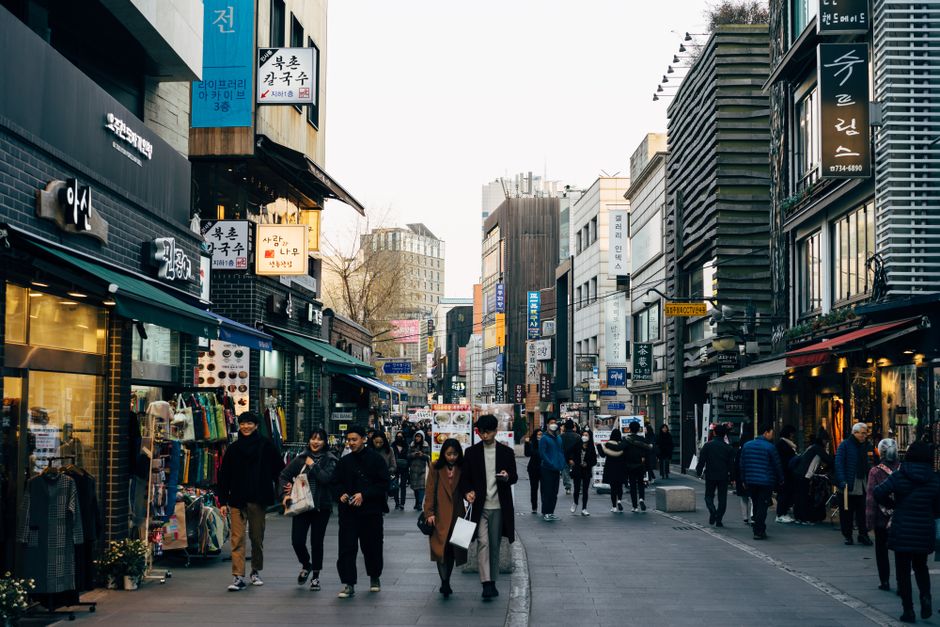
Korean street style in late October leans toward smart-casual layering, neutral or muted tones, and a generally put-together look even for everyday errands. You will see a lot of long coats, tailored trousers, knitwear, and clean leather or canvas shoes. Activewear is common for actual outdoor activity or going to the gym, but far less common as all-day casual wear than in the US, Canada, or Australia—wearing a full tracksuit and running shoes to a cafe or museum will mark you as a visitor.
Oversized or loose cuts are popular, especially among younger people in neighbourhoods like Hongdae (홍대), Itaewon (이태원), and Seongsu (성수동). Baggy jeans, long cardigans, and drop-shoulder shirts are all current. Colour palettes tend toward black, grey, beige, navy, and brown, with occasional pops of colour in accessories or outerwear. Extremely bright or heavily patterned clothing is rare outside specific fashion subcultures.
You do not need to dress like a local to be comfortable or respectful, but understanding the baseline helps you pack appropriately. If your usual travel uniform is cargo shorts, a branded T-shirt, a fleece vest, and hiking sandals, you will stand out more than someone in dark jeans, a plain sweater, and trainers. Neither is wrong, but the latter blends in more easily and works better for entering higher-end restaurants, hotel lobbies, or business-district cafes without feeling underdressed.
Accessories are minimal and functional. Small crossbody bags, backpacks, and tote bags are all common. Baseball caps are fine, but bucket hats and wide-brim sun hats are less common in late October. Sunglasses are useful during the day, and you will see plenty of locals wearing them, but oversized or mirrored styles are less common than simple dark lenses.
Rain gear and what to do about umbrellas
October rain in Korea is unpredictable but manageable. You might go the entire week without a drop, or you might get two or three days of light drizzle and occasional heavier showers. The rain rarely lasts all day—expect it to start suddenly, last an hour or two, then clear up just as fast.
Umbrellas are the default rain solution in Korea, far more common than rain jackets. Convenience stores sell cheap clear plastic umbrellas for around 2,000-5,000 KRW, and you will see umbrella stands outside subway exits, restaurants, and shops. If you have space in your luggage, bring a compact folding umbrella from home; if not, plan to buy one at a GS25, CU, or 7-Eleven as soon as rain starts. The cheap ones break easily in wind but work fine for light rain and short walks.
A packable rain jacket is a good alternative if you dislike carrying an umbrella or plan to hike. Look for something that folds into its own pocket and weighs under 300 grams. This also doubles as a windbreaker on breezy mornings. Waterproof trousers, rain ponchos, and rubber boots are unnecessary unless you are planning serious mountain hiking in Seoraksan (설악산) or Jirisan (지리산).
Many indoor spaces provide plastic umbrella bags or umbrella stands at the entrance. Restaurants and department stores expect you to bag your wet umbrella or leave it in a stand rather than bring it to your table. Some places provide the bags; others expect you to shake off your umbrella outside and leave it in the stand. If you are carrying a daypack, keep a small plastic bag inside to wrap a wet umbrella so it does not soak your belongings.
What you can skip and common overpacking mistakes
You do not need heavy winter gear. Late October is not winter, and first-time visitors often overpack based on the idea that Korea gets very cold. It does, but not until late November and December. A thick puffer coat, wool gloves, a knit beanie, and thermal underwear are all unnecessary in the last week of October and will take up luggage space you will not use. If you run unusually cold, one pair of lightweight thermal leggings to wear under trousers in the early morning is enough.
Skip the formal clothing unless you have a specific business meeting or high-end restaurant reservation. Korea is more casual than its reputation suggests, especially for tourists. You do not need a blazer, dress shoes, or a cocktail dress for general sightseeing, neighbourhood restaurants, or even most hotel dinners. Smart-casual is sufficient everywhere except the fanciest hotel restaurants and business settings.
You do not need multiple heavy sweaters. Indoor heating is strong, and you will be too warm if you wear a thick knit sweater on the subway or in a cafe. One medium-weight sweater or cardigan is enough; the rest of your warmth should come from layering and your outer jacket. Bulky clothing also makes it harder to adjust when moving between heated indoors and cool outdoors every 20-30 minutes.
Leave behind overly technical outdoor gear unless you are planning multi-day hikes. Moisture-wicking base layers, trekking poles, gaiters, and trail runners are overkill for city sightseeing and day trips to places like Nami Island (남이섬) or Bukchon Hanok Village (북촌한옥마을). Standard casual clothing works fine for the level of activity most visitors do.
Skip excessive toiletries and full-size bottles. You can buy shampoo, conditioner, soap, sunscreen, and basic skincare at any convenience store or pharmacy for less than you would pay at home, and it frees up luggage space. The exception is prescription items, specific skin or hair products you rely on, and medications that may not be available or easy to find without Korean-language labels.

Practical items that make the week easier
A daypack or crossbody bag you can carry comfortably for eight hours is essential. You will be out from breakfast until evening most days, and you need space for a water bottle, a jacket or sweater you have taken off, an umbrella, snacks, a battery pack, and purchases. A 15-20 litre daypack or a medium crossbody bag works well. Avoid large backpacks that make you bump into people on crowded subway cars, and avoid tiny purses that force you to carry your jacket in your hands all afternoon.
Bring a refillable water bottle. Tap water is safe to drink throughout South Korea, and many subway stations, public buildings, and convenience stores have water dispensers or fountains. Bottled water is cheap—around 800-1,200 KRW at a convenience store—but a reusable bottle saves money and reduces waste.
A portable battery pack keeps your phone alive during long days of navigation, photos, and transit-app checking. Naver Map and KakaoMap—the two apps that actually provide walking directions in Korea, since Google Maps does not—drain battery faster than you expect. A 10,000mAh battery pack gives you at least one full recharge and fits easily in a daypack.
Pack a few large zip-lock bags or a packable tote bag. You will accumulate small purchases, snacks from convenience stores, and takeaway food, and plastic bags are no longer provided free at most shops. A foldable tote bag takes up almost no space and prevents you from juggling five small items in your hands on the subway.
If you wear glasses, bring a backup pair or a copy of your prescription. If you wear contact lenses, bring enough for the trip plus a few extra days; while Korean opticians and lens shops are excellent, getting the exact brand and prescription you are used to without a Korean prescription can be time-consuming.

Sample one-week packing list for late October in South Korea
| Category | Items | Notes |
|---|---|---|
| Tops | 2-3 long-sleeve shirts or light sweaters | Breathable fabric that works alone or layered; avoid heavy knits |
| Bottoms | 2 pairs of trousers or jeans | Medium weight; one dark pair works for smarter casual settings |
| Outerwear | 1 medium-weight jacket + 1 light layer (hoodie or cardigan) | Main jacket for mornings and evenings; light layer for midday or extra warmth |
| Footwear | 1 pair of comfortable walking shoes + 1 optional indoor pair | Broken-in trainers or casual shoes; slip-on style helpful for shoe removal |
| Accessories | Scarf, compact umbrella, daypack, sunglasses | Scarf for early morning and evening; umbrella for unpredictable rain |
| Extras | Battery pack, refillable water bottle, lip balm, small hand cream | For long walking days, dry air, and constant phone navigation |
Practical tips
Frequently asked questions
Before you go
Late October in South Korea is layering season: warm enough at midday that a single jacket is too much, cool enough in the mornings and after dark that you will want a real outer layer and possibly a scarf. Pack separates that you can add and remove easily, prioritise comfortable walking shoes that work with the shoe-removal culture, and bring one genuinely warm jacket for evenings rather than multiple heavy sweaters that will overheat you indoors. The practical reality is that you will dress and undress a dozen times a day as you move between heated subway cars, cool outdoor plazas, warm cafes, and breezy riverfronts, and the visitors who pack light, layered, and broken-in always have a better week than those hauling winter coats and stiff boots they never actually need.
- What to Wear in Korea Winter: Men's Packing Guide (Dec-Feb)
- What to Wear in Korea in November: Layer Guide for 2025
- What to Wear in Korea Right Now: Month-by-Month Guide for 2026
- Best Things to Do Near Hongdae: 12 Activities Within Walking Distance
- 24 Hours in Seoul: A Realistic One-Day Itinerary for 2026
Taking a break from trip planning? Try a free 2-minute personality quiz at Quirkly.


Comments
Post a Comment