How to Travel Jeju Island Without a Car: 5 Real Options
Jeju Island (제주도) is built for drivers, but you can see the main coastal sights, waterfalls, villages and beaches without renting a car if you combine the island's intercity bus network with selective day tours or taxis for remote stops. The trade-off is straightforward: buses are cheap and reach most named attractions, but run infrequently and stop early, so you will spend more time waiting and cover fewer places per day than a driver would. This guide explains which routes work by bus, when a tour or taxi makes sense, what a realistic one-day radius looks like, and how to plan around the gaps in public transport so you do not waste half a day at an empty bus stop.

- Bus base fare
- Roughly 1,200-1,500 KRW per ride with a T-money card; longer intercity routes to Seongsan or Jungmun cost around 3,000-5,000 KRW depending on distance.
- Intercity bus frequency
- Major routes run every 15-30 minutes during the day; less-popular routes to east-coast villages may have 1-2 hour gaps or stop service after 6 PM.
- Day tour cost
- Group bus day tours covering 4-6 sights typically range from 50,000-90,000 KRW per person, including transport and an English-speaking guide but not entry fees or lunch.
- Taxi estimate
- A one-way trip from Jeju City to Seongsan Ilchulbong costs roughly 35,000-50,000 KRW depending on traffic; short hops between nearby sights cost 5,000-10,000 KRW.
- Navigation app
- Google Maps transit directions work for Jeju buses, but Naver Map and KakaoMap show live bus arrival times and stop names in English; download one before you arrive.
- Realistic daily coverage
- Expect to visit 2-3 main sights per day by bus due to waiting time and early last departures; drivers routinely cover 5-6 stops in the same span.
- Understanding Jeju's public bus network and where it actually goes
- Getting to and from Jeju International Airport without a car
- Which sights are genuinely reachable by bus and which are not
- When a group day tour is the better option
- Using taxis strategically for remote stops and point-to-point legs
- Renting bicycles or e-bikes for coastal sections and Olle Trails
- Practical tips for staying on schedule and avoiding common mistakes
- Comparison of transport options for car-free travel on Jeju Island
- Practical tips
- Frequently asked questions
Understanding Jeju's public bus network and where it actually goes
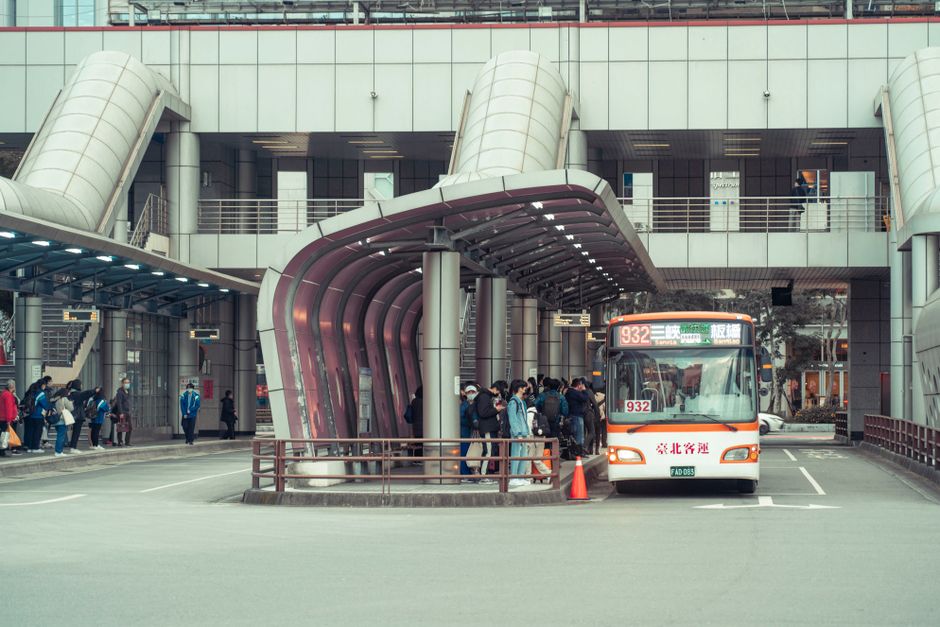
Jeju's intercity bus system connects Jeju City (제주시) in the north and Seogwipo City (서귀포시) in the south with coastal towns and the handful of inland villages, and most named tourist sights sit within a short walk of a numbered bus route. The network is not designed for tourists making multi-stop loops; it is built for residents commuting between towns, so buses run radially from the two main terminals rather than circling the coast. That means traveling from one side of the island to the other often requires a transfer at Jeju City Intercity Bus Terminal (제주시외버스터미널) or Seogwipo Intercity Bus Terminal (서귀포시외버스터미널), adding 30-60 minutes to your total journey time.
The most useful routes for visitors are the 201 (Jeju City to Seongsan Ilchulbong via the east coast), the 282 (Jeju City to Jungmun Resort via the west coast and Seogwipo), and the 600-series express buses that run the cross-island highway between the two terminals. Schedules and live arrival times are shown in English on Naver Map (네이버 지도) and KakaoMap (카카오맵); Google Maps shows the route network but does not display live updates or all the smaller stops. Load one of those Korean apps and save your hotel address and target bus stops in English and Hangul before you leave for the day, because mobile data at a remote bus shelter is the only way to confirm the next departure is still coming.
Key routes stop running between 6 PM and 9 PM, depending on the line. If you plan to watch the sunset at Yongmeori Coast (용머리해안) or take an evening walk in Seongeup Folk Village (성읍민속마을), check the return bus schedule first; the last departure back to Jeju City from eastern villages often leaves before 7:30 PM. Missing it means calling a taxi, which can take 20-40 minutes to arrive in rural areas and will cost you 30,000-60,000 KRW to get back to your hotel. Budget an extra hour of buffer time before the last bus, because delays, long photo stops and underestimating walking distance are the three most common ways travelers get stranded.
Getting to and from Jeju International Airport without a car
Jeju International Airport (제주국제공항) sits just outside Jeju City, roughly 2-3 kilometers from the downtown hotel district, and is the simplest leg of any car-free Jeju trip. Limousine airport buses numbered 600, 800 and others run from the arrivals hall to major hotels in Jeju City, Jungmun Resort, and Seogwipo City every 15-30 minutes during the day, with fares ranging from roughly 3,000-6,000 KRW depending on your destination. You pay with cash or a T-money card when boarding; if you did not pick up a T-money card at the airport convenience store, exact change is helpful but drivers will provide change for small notes. The ride into central Jeju City takes about 20 minutes; Seogwipo and Jungmun are 50-70 minutes depending on traffic.
Taxis queue outside the arrivals exit and are metered with no airport surcharge. A taxi to Jeju City costs roughly 5,000-8,000 KRW, to Jungmun 35,000-45,000 KRW, and to eastern towns like Seongsan 45,000-60,000 KRW. Standard taxis are silver; deluxe black taxis charge about 20-30 percent more. Tipping is not customary in South Korea; the meter fare is the total you pay, and leaving extra money on the seat will confuse the driver. If your driver does not speak English, show them the Hangul name of your hotel on your phone screen or booking confirmation; that is clearer than trying to pronounce an English transliteration.
If you are arriving late at night or have an early-morning departure, confirm in advance that your hotel is on an airport bus route that runs at your arrival time. Some hotel shuttles operate on request, but they are not standard, and the last airport buses to Seogwipo and Jungmun typically depart between 9 PM and 10 PM. If you land after that window, a taxi is your only public option. Walking from the airport to Jeju City downtown hotels is possible in daylight but takes 40-50 minutes with luggage and crosses busy roads with minimal sidewalks; only consider it if you are traveling ultralight and enjoy a warm-up walk.
Which sights are genuinely reachable by bus and which are not
Most of Jeju's UNESCO, waterfall, and coastal cliff sites sit on or within 500 meters of a bus route, but arrival frequency and last-departure times create real constraints. Seongsan Ilchulbong (성산일출봉), the volcanic tuff cone on the east coast, is served by buses 201 and 701 with departures roughly every 20-30 minutes until early evening; the stop is directly at the entrance, and you can walk up, take photos at the summit, and catch a return bus within 90 minutes total. Manjanggul Cave (만장굴), the lava tube near Gimnyeong, is a 15-minute walk from the nearest bus stop on route 201, and the last bus back to Jeju City often departs around 7 PM, so plan to finish your cave visit by 6 PM to avoid a long wait or a taxi.
Seongeup Folk Village (성읍민속마을) in the island's interior is accessible by buses 201 and 211, but service is infrequent—sometimes one or two buses per hour—and the village itself is small enough that you will finish in 45 minutes unless you stop for lunch. Hallasan National Park (한라산국립공원) has trailheads at Seongpanak (성판악) and Eorimok (어리목) that are reachable by infrequent buses from Jeju City, but the summit trail is 9-10 hours round trip, and the last bus down leaves mid-to-late afternoon; most hikers without cars either arrange a private shuttle through their accommodation or book a tour group that includes transport. Cheonjiyeon Waterfall (천지연폭포) is a short walk from Seogwipo Intercity Bus Terminal, so it pairs easily with downtown Seogwipo cafes and the Olle Market.
Sights that are difficult or impractical by bus include O'sulloc Tea Museum (오설록티뮤지엄), which sits on the west-center plateau between bus routes; Yongmeori Coast (용머리해안), where the nearest stop is a 20-minute walk and service is sparse; and the Suwolbong Peak (수월봉) area on the far west coast, where buses run once every 1-2 hours and stop early. For these, a day tour or a half-day taxi hire makes sense. You can also use a taxi for a single leg—bus out to Seongsan in the morning, taxi from Seongsan to Seongeup Folk Village for 15,000-20,000 KRW, then bus back to Jeju City—if you want to control your own timing without paying for a full-day tour.
When a group day tour is the better option
Group bus day tours operate from Jeju City and cover 4-6 sights in a fixed loop, typically departing around 9 AM and returning by 6 PM. English-language tours are widely available and cost roughly 50,000-90,000 KRW per person depending on the itinerary and group size, not including entry fees, lunch, or optional activities like horseback riding or ATV sessions. Tours remove the waiting, navigating and last-bus anxiety that define independent bus travel, and they reach combinations of sights that are difficult to link by public transport in one day—such as O'sulloc Tea Museum, Yongmeori Coast, and Jusangjeolli Cliffs in a single western loop.
The trade-off is that you follow a fixed schedule, spend about 30-40 minutes at each stop, eat lunch where the bus stops, and travel with a group of 15-30 other people, most of whom will be taking photos at the same viewpoint you are. If you care more about seeing a checklist of famous spots than lingering at one place, tours deliver efficiently. If you want to watch the sunrise at Seongsan Ilchulbong, walk alone along a beach, or spend three hours hiking a single trail, they do not. Tours also cluster around the same high-season sights; if you want to visit lesser-known Olle Trail sections, small fishing villages, or off-route temples, you will not find a tour that goes there.
Book tours through your accommodation, a licensed travel desk at the airport, or major Korean platforms like Klook or KKday, which show English itineraries, pick-up points, and customer reviews. Avoid unlicensed van services offering cheaper private tours through street touts or unverifiable social-media contacts; insurance and accountability are real considerations if the vehicle breaks down or an accident occurs. Confirm what the tour price includes—transport and a guide are standard, but entry fees for caves, parks or museums are often not included, and lunch is sometimes an optional add-on. Add up those extras before booking; a 60,000 KRW tour can become 85,000 KRW after fees and a meal.

Using taxis strategically for remote stops and point-to-point legs
Jeju taxis are metered, widely available in Jeju City and Seogwipo, and a practical tool for filling gaps in the bus network if you plan the expense in advance. A typical point-to-point ride between two sights on the same coast—such as Seongsan Ilchulbong to Seongeup Folk Village, or Cheonjiyeon Waterfall to Jungmun Beach—costs roughly 10,000-25,000 KRW and saves 60-90 minutes compared to busing back to the nearest transfer hub and out again. That can be the difference between seeing three sights or two in a single day.
You can also negotiate a half-day or full-day taxi hire for a fixed price, typically around 100,000-150,000 KRW for four hours or 180,000-250,000 KRW for eight hours, depending on distance and the driver's English level. The driver will take you to a list of sights you specify, wait while you walk around, and drive you back to your hotel. This is less structured than a group tour and more expensive than buses, but it gives you full control over timing and lets you add or skip stops on the fly. Arrange hired taxis through your hotel front desk or a licensed taxi company, not through informal offers on the street, and confirm the total price, duration, and which sights are included before you get in the car. Get the agreement in writing or via a messaging app if possible; misunderstandings about price are rare but do happen, especially when drivers and passengers do not share a language.
In rural areas and at remote trailheads, hailing a passing taxi is unreliable. If you bus out to a distant village or beach and plan to taxi back, ask your hotel to recommend a local taxi dispatch number, save it in your phone, and call ahead rather than hoping one will drive past. Drivers in Jeju generally do not speak conversational English, so prepare your destination in Hangul and have a map pin ready to show. Tipping is not customary; the meter or agreed fare is what you pay. If you try to leave extra cash, the driver will hand it back or assume you made a counting error.
Renting bicycles or e-bikes for coastal sections and Olle Trails
Bicycle and electric-bike rentals are available in Jeju City, Seogwipo, and resort areas like Jungmun, with daily rates ranging roughly from 10,000-20,000 KRW for a standard bike and 25,000-40,000 KRW for an e-bike. Some shops require a passport or cash deposit. Cycling is practical for short coastal stretches, loops around Seongsan or Udo Island (우도), and connecting sights within 5-10 kilometers of your base, but Jeju's coastal roads carry fast car traffic, dedicated bike lanes are inconsistent, and the terrain between towns is hilly enough that a non-electric bike can become strenuous work in summer heat.
E-bikes extend your comfortable range to about 20-30 kilometers in a half-day and are the best cycling option for covering two or three sights along the coast—such as Hamdeok Beach (함덕해수욕장), Gimnyeong Maze, and Manjanggul Cave in a morning ride from Jeju City. Battery life is advertised at 40-60 kilometers depending on terrain and assist level; ask the rental shop to charge it fully before you leave and confirm what happens if it runs flat mid-route. Many shops offer a pick-up or swap service for a small fee, but you need a local SIM or working data to call them.
Udo Island, a small island off Jeju's east coast reachable by a 15-minute ferry from Seongsan, is the one place where nearly every visitor rents a bike or e-bike because the island has a flat 17-kilometer coastal loop and minimal car traffic. Ferries run every 30-60 minutes depending on season and cost roughly 8,000-10,000 KRW round trip per person; bikes are permitted on the ferry for an additional fee or you can rent on Udo itself. The loop takes 2-3 hours at a relaxed pace with stops for photos and peanut ice cream at the coastal cafes. If you plan only one bike day in Jeju, make it Udo; for mainland Jeju, cycling works well for short explorations but is not a substitute for the bus or taxi network for covering the full island.

Practical tips for staying on schedule and avoiding common mistakes
The biggest mistake first-time visitors make is assuming bus schedules are as frequent and reliable as subway trains in Seoul. On Jeju, buses run less often, stop early, and rarely have a waiting shelter or seating at rural stops, so always confirm the return-bus time before you get off, take a photo of the schedule board at the stop, and set a phone reminder 30 minutes before the last bus you are willing to catch. If the stop has no posted schedule or the paper is faded and unreadable, check Naver Map or KakaoMap for live arrival times; those apps pull real-time data from the bus GPS system, and they will show if a bus is running late or canceled.
Carry a T-money card loaded with at least 20,000-30,000 KRW if you plan to bus around the island for multiple days; you can top up at any convenience store (GS25, CU, 7-Eleven, Emart24) by handing the card and cash to the cashier and saying 'chungjeong' (충전) or showing the card and a bill. A standard T-money card costs roughly 2,500-4,000 KRW to buy at convenience stores and station machines. Character and designer editions cost about 4,000-5,000 KRW. The card price itself is not refundable; the loaded balance is. Cash is also accepted on buses, but you will need exact or close-to-exact change, and drivers may not break a 50,000 KRW note at a rural stop. Card payment is faster and reduces boarding delays.
Download offline maps for Jeju in Naver Map or KakaoMap before your first day, because mobile data can be weak or absent along remote coastal roads and inland trails. Save your hotel address, major bus terminals, and the Hangul names of your planned sights in your phone notes or a translation app so you can show them to drivers and staff without spelling English names aloud. Bring a small battery pack and charging cable, because navigating all day with GPS, live bus times, and translation lookups will drain your phone by mid-afternoon. Always start your day early—ideally catching your first bus by 9 AM—because the limited frequency and early last departures mean late starts cascade into missed connections or rushed visits. If you sleep in and start at noon, you will realistically see only one major sight before the return schedule forces you back.

Comparison of transport options for car-free travel on Jeju Island
| Transport mode | Typical cost per day | Best for | Main limitation |
|---|---|---|---|
| Intercity bus | 5,000-15,000 KRW in total fares depending on distance | Budget travelers, single-destination days, major coastal sights like Seongsan and Jungmun | Infrequent service, early last departure, long waits for transfers, limited access to inland and west-coast sights |
| Group day tour | 50,000-90,000 KRW per person plus entry fees | First-time visitors, covering 4-6 sights in one day, west-coast and inland loops difficult by bus | Fixed schedule, short stops, no flexibility, must follow group pace |
| Taxi (single rides) | 10,000-50,000 KRW per ride depending on distance | Filling bus-network gaps, point-to-point hops, late-night or early-morning transport | Adds up quickly for multiple trips, hard to hail in remote areas, drivers rarely speak English |
| Taxi (half-day hire) | 100,000-150,000 KRW for 4 hours | Flexible custom itinerary, small group of 2-4 people splitting cost, sights off the bus network | More expensive than buses or tours, must arrange through hotel or licensed company, agree price in advance |
| Bicycle or e-bike | 10,000-40,000 KRW per day depending on bike type | Short coastal loops, Udo Island, Olle Trail sections, flat areas near Seongsan or Jungmun | Limited range, hilly terrain, inconsistent bike lanes, not practical for full-island coverage |
Practical tips
Frequently asked questions
Before you go
Jeju without a car is a slower, more selective experience, but it is entirely workable if you anchor your days around the intercity bus routes, use taxis or tours to fill gaps for remote sights, and build realistic schedules around infrequent service and early last departures. The east coast, Seongsan, Seogwipo, and the major waterfalls are accessible and affordable by bus; the west coast, inland plateau, and scattered beaches require either a group tour, a hired taxi, or accepting that you will skip them. Start early, confirm return times before you step off the bus, carry a charged phone with Naver Map or KakaoMap installed, and expect to see two or three well-chosen places per day rather than a rushed checklist of six.
Taking a break from trip planning? Try a free 2-minute personality quiz at Quirkly.


Comments
Post a Comment