How to Travel from Gangneung to Sokcho: 4 Ways Compared
Gangneung (강릉) and Sokcho (속초) sit roughly 60 kilometres apart along South Korea's northeast coast, and most travellers make this journey to visit Seoraksan National Park (설악산국립공원) or to continue up the east coast. Express buses take around 50 to 70 minutes, local buses take 80 to 100 minutes, taxis take about 50 minutes, and private transfers cost significantly more. This guide compares the four main options with fares, booking procedures, departure frequencies and practical trade-offs, so you can choose the method that fits your schedule, budget and comfort level.
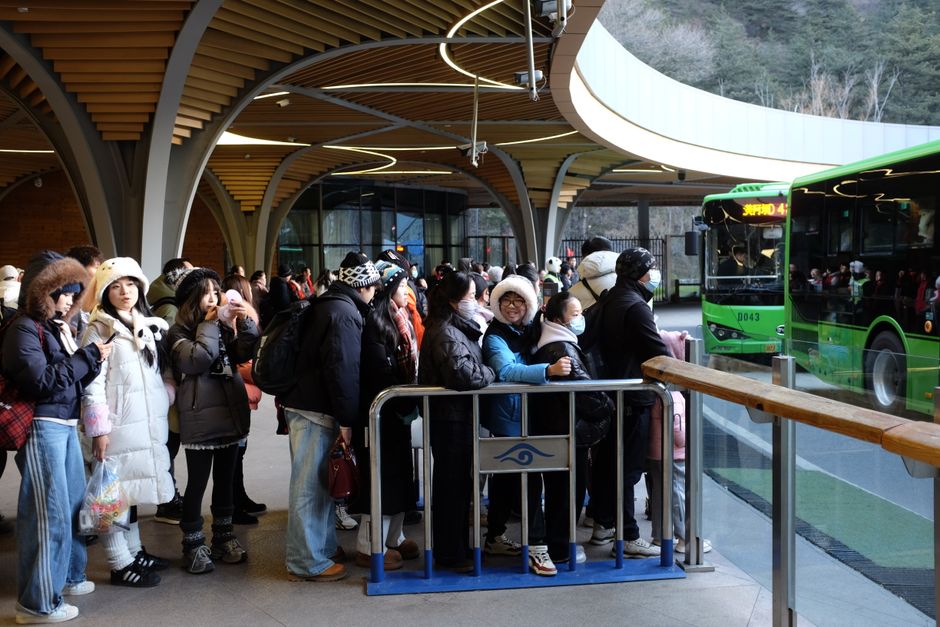
- Fastest option
- Express bus, roughly 50-70 minutes depending on route and traffic
- Cheapest option
- Local bus, typically around 5,000-7,000 KRW (approximately 4-5 USD)
- Departures per day
- Express buses run roughly every 30-60 minutes during daytime; local buses less frequent
- Taxi fare estimate
- Approximately 50,000-70,000 KRW (35-50 USD), metered, varies by traffic
- Booking required
- Optional for express buses; recommended on weekends and public holidays
- Navigation apps
- Use Naver Map or KakaoMap for real-time schedules; Google Maps does not show walking or driving directions in Korea
- Express bus from Gangneung to Sokcho
- Local city buses and intercity routes
- Taxi and private car services
- Rental cars and driving yourself
- Which option to choose based on your plans
- Practical tips for the journey
- Onward travel from Sokcho to Seoraksan and beyond
- Gangneung to Sokcho transport options compared
- Practical tips
- Frequently asked questions
Express bus from Gangneung to Sokcho
The express bus (고속버스 / 시외버스) is the most popular choice because it runs frequently, takes around 50 to 70 minutes, and costs roughly 6,000 to 9,000 KRW per adult one-way. Buses depart from Gangneung Express Bus Terminal (강릉고속버스터미널), which sits about two kilometres southwest of Gangneung Station (강릉역). You can walk from the station in about 25 minutes, take a city bus, or use a taxi for around 4,000 to 6,000 KRW. Buses arrive at Sokcho Express Bus Terminal (속초고속버스터미널), roughly one kilometre from the central tourist district and Sokcho Beach (속초해변).
Tickets can be purchased at the terminal ticket counters, at self-service machines that accept cash and cards, or online through mobile apps and websites. The two main booking platforms are the Intercity Bus app (operated by the Korea Transport Safety Authority) and websites run by individual terminal operators, but most foreign visitors find it simpler to buy tickets on arrival unless travelling during a Korean public holiday or a weekend in peak summer or autumn foliage season, when advance booking is wise. Staff at ticket counters rarely speak fluent English, but pointing to 'Sokcho' written in Hangul (속초) and holding up fingers for the number of passengers works reliably.
Buses are modern coaches with reclining seats, onboard toilets, and luggage racks. The route follows coastal highway Route 7 (국도 7호선), offering occasional views of the East Sea (동해, also called the Sea of Japan internationally). Buses make no intermediate stops between terminals, so the journey is direct. Departure frequency is roughly every 30 to 60 minutes throughout the day, with reduced evening and early morning schedules. Always check the current timetable on Naver Map or KakaoMap the day before you travel, because schedules adjust seasonally and for holidays.
Local city buses and intercity routes
Local and intercity buses on the Gangneung–Sokcho corridor are slower than express buses but often a few hundred won cheaper, typically costing around 5,000 to 7,000 KRW. Journey time ranges from 80 to 100 minutes because these buses make multiple stops in towns along the coast, including Yangyang (양양) and sometimes Naksansa (낙산사) temple area. The benefit is that you can board at more locations within Gangneung, not just the express terminal, and alight closer to specific destinations if you are stopping at intermediate points.
To find the correct bus, open Naver Map or KakaoMap, enter your current location in Gangneung as the start point and 'Sokcho' (속초) as the destination, then tap the public-transport routing option. The app will display available buses with route numbers, departure times and estimated travel duration. Pay attention to the route number and the bus-stop name shown in the app, because Gangneung has multiple intercity bus stops and the naming can be confusing if you rely on direct English translations.
Payment on local buses is handled with a T-money card (티머니카드) or compatible transport card, or with cash handed to the driver when boarding. T-money cards are widely sold at convenience stores, subway stations and some tourist information centres for about 2,500 to 4,000 KRW for a standard card, and you load balance at the same locations or at ATMs that support top-up. If paying cash, have small bills ready because drivers often cannot make change for large notes. Tap your card on the reader when boarding and again when alighting; the fare is calculated by distance. Foreign visitors sometimes forget the exit tap and are charged the maximum fare, so make it a habit.

Taxi and private car services
Taking a taxi from Gangneung to Sokcho costs approximately 50,000 to 70,000 KRW depending on your exact pickup and drop-off locations, time of day, and traffic. The metered fare is transparent, and Korean taxis are regulated and reliable. Journey time is about 50 minutes in light traffic, though it can stretch to 70 or 80 minutes during weekend mornings when Korean domestic tourists head to Seoraksan. Taxis are a practical choice if you are travelling with two or more people, have heavy luggage, or want to stop briefly at a coastal viewpoint or temple along the way.
You can hail a regular taxi in Gangneung city centre or at Gangneung Station, or use the Kakao T app (카카오 T), which is Korea's dominant ride-hailing service and has an English-language interface. Download the app before your trip, link a Korean or international credit card, and set your pickup and destination addresses using the map interface. The app estimates the fare in advance and charges your card automatically, removing any language barrier or payment confusion. Uber does not operate in South Korea outside of a black-car service in Seoul, so Kakao T is the tool foreign visitors need.
Private transfer services, often marketed to tourists through hotel concierges or travel agencies, charge a flat rate that typically ranges from 80,000 to 120,000 KRW and may include an English-speaking driver or the option to add stops such as Naksansa Temple (낙산사) or Yangyang Surfing Beach (양양 서핑해변). These services are convenient but rarely necessary unless you have mobility constraints or a complex itinerary. Regular metered taxis offer nearly the same flexibility at a lower cost.
Rental cars and driving yourself
Renting a car for the Gangneung–Sokcho leg and the wider east-coast region is straightforward if you hold an International Driving Permit (IDP) issued under the 1949 Geneva Convention, which South Korea recognises alongside your home-country licence. Rental agencies including Lotte, AJ, SK and Hertz operate branches in Gangneung, often near the train station or the express terminal, and daily rates for a compact car range roughly from 40,000 to 70,000 KRW, excluding fuel and insurance.
The drive takes about 50 minutes via Route 7, a well-maintained coastal highway with clear Korean and occasional English signage. Navigation is essential because exits and intersections come quickly, and Google Maps does not provide turn-by-turn driving directions in South Korea due to mapping-data export restrictions. Instead, download Naver Map or KakaoMap, both of which offer full driving directions and real-time traffic alerts in English. Korean roads drive on the right, speed limits are enforced with fixed and mobile cameras, and highway tolls are collected electronically or at toll booths with cash and card accepted.
Fuel stations are frequent along the route, and payment is straightforward with credit cards. Parking at Sokcho's main tourist areas such as Sokcho Beach, Sokcho Tourist & Fishery Market (속초관광수산시장), and near the Seoraksan park entrance is available but can be tight on weekends, with hourly rates roughly 2,000 to 4,000 KRW. Driving gives you the freedom to stop at coastal temples, beaches and viewpoints without waiting for bus schedules, making it a strong option for travellers planning multi-day exploration of the east coast. However, if your itinerary is limited to Gangneung and Sokcho city centres, the bus is simpler and cheaper.

Which option to choose based on your plans
If you are travelling alone or as a pair, on a moderate budget, and moving between the city centres of Gangneung and Sokcho without heavy luggage, the express bus is the clear choice. It is fast, frequent, affordable, and requires no advance planning beyond checking the day's timetable. Purchase your ticket on arrival at the terminal unless you are travelling during a Korean public holiday such as Chuseok (추석) or Seollal (설날), or during peak autumn foliage weekends in October, when buses can fill up. The journey is comfortable and direct, and you will arrive at Sokcho Express Bus Terminal within easy reach of the central district, the beach, and onward buses to Seoraksan National Park.
If you want to save a small amount of money and are not in a rush, consider the local or intercity bus routes. These take longer and make intermediate stops, but they are useful if you want to visit Naksansa Temple or Yangyang en route, or if your accommodation in Gangneung is far from the express terminal and closer to a local bus stop. Use Naver Map or KakaoMap to identify the best route and stop, and carry a T-money card for seamless boarding and payment.
Taxis and private transfers make sense if you are a group of three or four, if you have oversized luggage such as surfboards or camping gear, or if you want the flexibility to stop along the coast for photos, a meal, or a short temple visit. The per-person cost of a taxi split among four people approaches the express bus fare while offering door-to-door convenience. Rental cars suit travellers planning to explore beyond Gangneung and Sokcho—such as driving further north to Goseong (고성) and the Demilitarized Zone (DMZ) viewing areas, or south to Jumunjin (주문진) and Jeongdongjin (정동진)—and who are comfortable navigating Korean roads using Naver Map or KakaoMap.
Practical tips for the journey
Korean intercity buses and local services are punctual and well-maintained, but a few practical details trip up first-time foreign visitors. First, if you are buying a ticket at the terminal counter and the staff do not speak English, have the destination name written in Hangul on your phone screen or a piece of paper—showing '속초' is far more effective than saying 'Sokcho' with an English pronunciation. Second, express bus terminals in Korea often have multiple platforms and gates, and departure boards display route numbers and times in Korean with occasional English. Arrive 10 to 15 minutes before your scheduled departure to locate the correct platform; platform numbers are usually shown on your ticket.
Bring small bills or coins if you plan to pay cash on a local bus, because drivers do not always carry change for 10,000 or 50,000 KRW notes. If using a T-money card, check your balance before boarding—you can top up at any convenience store, including the GS25, CU, and 7-Eleven chains found near bus terminals and train stations. The cards work across the country, so the same card you used in Seoul or Busan will function in Gangneung and Sokcho.
Onboard express buses, toilets are available but stops are not scheduled, so use the terminal restroom before departure if needed. Buses often play Korean television or music at moderate volume, and seats do not have individual controls; bring headphones if you prefer your own audio. Luggage goes in the undercarriage hold or on overhead racks depending on size, and the driver or terminal staff will direct you when loading.
Cell coverage along the route is excellent, and most buses do not offer onboard Wi-Fi, so ensure your phone has a Korean SIM card, eSIM, or portable Wi-Fi device if you want to use navigation apps or check messages during the trip. Tipping is not customary anywhere in South Korea, including for taxi drivers and bus drivers, and offering money can cause confusion; the fare shown is the total amount due, with service already included.

Onward travel from Sokcho to Seoraksan and beyond
Most travellers heading from Gangneung to Sokcho are continuing to Seoraksan National Park (설악산국립공원), one of Korea's most visited natural attractions. From Sokcho Express Bus Terminal, city bus routes 7 and 7-1 run to the Seoraksan park entrance area, taking roughly 20 to 30 minutes and costing around 1,500 to 2,000 KRW with a T-money card. Buses depart every 20 to 30 minutes during daytime. The park has multiple entry gates; the most popular is Seorak-dong (설악동), where the cable car, Sinheungsa Temple (신흥사), and major hiking trails begin. Check Naver Map or KakaoMap for real-time bus departure times and the correct stop near your Sokcho accommodation.
If you are travelling further north from Sokcho toward the Demilitarized Zone observation points such as Goseong Unification Observatory (고성통일전망대), intercity buses and local routes operate from Sokcho Intercity Bus Terminal (속초시외버스터미널), which is separate from the express terminal but within walking distance in the city centre. Journey times to Goseong are roughly 40 to 60 minutes, and services are less frequent than the Gangneung–Sokcho corridor, so confirm schedules in advance using the navigation apps.
Sokcho is also a hub for seafood markets, particularly Sokcho Tourist & Fishery Market (속초관광수산시장) and Daepo Port (대포항), and the city centre is compact enough to explore on foot or with short taxi hops. Accommodation ranges from budget guesthouses to mid-range hotels, and the area fills quickly during Korean public holidays and autumn weekends when Seoraksan's foliage peaks. If your Gangneung–Sokcho trip falls during these periods, book your Sokcho accommodation well in advance and consider reserving your express bus ticket online a day or two before travel to avoid sold-out departures.

Gangneung to Sokcho transport options compared
| Method | Journey time | Approximate fare (KRW) | Best for |
|---|---|---|---|
| Express bus | 50-70 minutes | 6,000-9,000 | Most travellers; frequent, direct, comfortable |
| Local/intercity bus | 80-100 minutes | 5,000-7,000 | Budget travellers, or stopping at intermediate towns |
| Taxi (metered) | 50 minutes | 50,000-70,000 | Groups of 3-4, heavy luggage, custom stops |
| Private transfer | 50 minutes | 80,000-120,000 | Convenience, English-speaking driver, fixed price |
| Rental car (self-drive) | 50 minutes | 40,000-70,000/day + fuel | Multi-day east-coast exploration, flexibility |
Practical tips
Frequently asked questions
Before you go
If you are moving between Gangneung and Sokcho city centres without heavy luggage or complex timing needs, the express bus is the fastest, most frequent and most affordable option, taking roughly an hour and costing under 10,000 KRW. Taxis suit groups or travellers with oversized bags, and rental cars make sense if you are exploring the wider east coast for multiple days. Check current bus schedules on Naver Map or KakaoMap the day before travel, carry a topped-up T-money card for any local buses, and book express tickets in advance only if travelling during Korean public holidays or peak weekends.
Taking a break from trip planning? Try a free 2-minute personality quiz at Quirkly.


Comments
Post a Comment