What to Eat in Korea During Winter: 12 Essential Dishes
Korean winter, running from late November through March, centres its food culture around warmth. The dishes are built for cold: thick stews that simmer at the table, soups served in stone pots that hold heat for twenty minutes, and street snacks eaten standing beside the cart. This is not subtle food—portions are large, broths are rich, and chilli paste appears in most savoury dishes. After reading this guide, you will know which dishes to order depending on the weather, how much they cost, where to find them, and what to expect when the server sets down a bubbling pot with a portable burner still running underneath it.

- Winter food season
- Late November to early March, peaking during January and February when temperatures drop below freezing
- Typical meal cost
- Street snacks roughly 2,000-5,000 KRW, casual soup and stew restaurants 8,000-15,000 KRW per person, higher-end hotpot 20,000-35,000 KRW
- Spice level
- Most winter soups and stews contain gochugaru (red chilli flakes) or gochujang (chilli paste); ask for 'an-maeweoyo' (안매워요, not spicy) when ordering if needed
- Dining format
- Many winter dishes cook at the table on portable gas burners; servers control the heat and refill banchan (side dishes) without asking
- Payment
- Cards accepted almost everywhere; tipping is not customary and leaving cash may cause confusion
- Finding restaurants
- Use Naver Map or KakaoMap with English interface; Google Maps does not provide walking directions in Korea
- Why Korean winter food is built around heat
- Soups and stews you will see on every winter menu
- Ginseng chicken soup and other restorative broths
- Hotpot meals cooked at your table
- Street food and snacks for walking in the cold
- Where to find winter dishes in major cities
- Practical ordering and etiquette for winter meals
- Common winter dishes, spice level, and typical cost
- Practical tips
- Frequently asked questions
Why Korean winter food is built around heat
Korean winters are dry and cold, with Seoul averaging -5°C to 2°C from December through February and wind chill making it feel colder. The food culture responds with dishes designed to raise core temperature: soups and stews are the default lunch and dinner format, and most are served in heavy stone or earthenware bowls that retain heat. Restaurants keep portable gas burners at each table so broths continue bubbling throughout the meal.
The ingredient list shifts in winter. Root vegetables—radish, sweet potato, potato—appear in nearly every stew. Fermented pastes, especially doenjang (soybean paste) and gochujang (fermented chilli paste), add umami and a warming bite. Pork, particularly pork belly and neck, is more common than beef because the fat content suits long, slow simmering. Seafood stews use oysters, clams and cod, which are in season along Korea's coasts from November through February.
Portion sizes are generous. A single serving of jjigae (stew) is often enough for a light meal on its own, but it is usually ordered alongside rice and banchan, the rotating selection of small vegetable and kimchi side dishes that appear automatically at every Korean meal. If you are eating alone, some restaurants will serve a smaller ddukbaegi (뚝배기) stone-pot portion; others require a two-person minimum for certain dishes. Check Naver Map reviews in English to see what solo diners report.
Soups and stews you will see on every winter menu
Kimchi-jjigae (김치찌개) is the baseline: a thick, red stew made with aged kimchi, pork or tuna, tofu, and gochugaru. It is served bubbling in a stone pot, and the longer the kimchi has fermented, the deeper and more sour the flavour. Expect to pay around 7,000-10,000 KRW for a bowl with rice and banchan at a casual restaurant. It is everywhere, from university lunch spots to hotel breakfast buffets.
Doenjang-jjigae (된장찌개) is the other everyday option: a brownish, miso-like stew made with fermented soybean paste, tofu, zucchini, potato, and sometimes clams or dried anchovies. The flavour is earthy and salty, less sharp than kimchi-jjigae. Price and availability are similar.
Sundubu-jjigae (순두부찌개) uses soft, uncurdled tofu that breaks apart in the broth. The base is usually seafood (clams, shrimp, oysters) or pork, with gochugaru for heat. It arrives still boiling, and the server cracks a raw egg into the pot at the table so it poaches in the residual heat. You eat it with a spoon, scooping tofu, broth and egg over rice. This is one of the few stews commonly available in individual portions for solo travellers.
Budae-jjigae (부대찌개), or army stew, comes from post-war Uijeongbu, where cooks combined surplus U.S. military rations—hot dogs, Spam, baked beans—with Korean ingredients like kimchi, gochujang, and ramyeon noodles. It is a large communal pot, usually shared by two or more people, and it tastes exactly like its history: processed, salty, oddly comforting. You will find it in dedicated budae-jjigae restaurants, particularly around Seoul and near U.S. military bases.

Ginseng chicken soup and other restorative broths
Samgyetang (삼계탕) is a whole young chicken stuffed with glutinous rice, ginseng root, jujube, and garlic, then simmered in broth until the meat falls off the bone. Koreans eat it in summer for stamina, but it appears on winter menus as well, especially in neighbourhoods popular with older diners and tourists. The flavour is mild, slightly sweet, and herbal. The chicken is small enough that one bird serves one person. Prices range from roughly 15,000 to 20,000 KRW. You pull the meat apart with your spoon and chopsticks, mix it with the rice inside, and drink the broth from the bowl.
Seolleongtang (설렁탕) is a milky-white ox-bone broth that has simmered for hours until the collagen and marrow emulsify into the liquid. It is served plain, with sliced beef and noodles, and you season it yourself at the table with salt, chopped green onion, and pepper. The flavour is subtle and beefy; the texture is almost creamy. It is a common late-night meal and hangover remedy. A bowl costs around 9,000-12,000 KRW and comes with rice and kimchi.
Galbitang (갈비탕) is a clear beef short-rib soup with radish, glass noodles, and sometimes egg. The ribs are left on the bone, and the broth is lighter than seolleongtang but still rich. It is more expensive—typically 12,000-16,000 KRW—and often ordered for a slightly more formal meal. Both seolleongtang and galbitang are good options if you want something warm but not spicy.
Hotpot meals cooked at your table
Jeongol (전골) is the category name for large hotpots that cook over a burner at the table. Shabu-shabu, though originally Japanese, is extremely popular in Korea during winter and fits the same format: thinly sliced beef or pork, mushrooms, leafy vegetables, tofu and noodles cooked in a light broth. You cook each ingredient yourself, dipping the cooked meat in sesame or ponzu sauce. It is a leisurely meal, usually ordered for two or more people, and costs roughly 15,000-25,000 KRW per person depending on the meat quality.
Gopchang-jeongol (곱창전골) is an intestine hotpot, using beef or pork gopchang (small intestine) and yang (tripe) along with vegetables in a spicy broth. The texture is chewy and slightly fatty. This is not a beginner dish if you are unfamiliar with offal, but it is common in Korean BBQ districts and popular as a late-night group meal. Expect to pay around 12,000-18,000 KRW per person.
Maeun-tang (매운탕) is a spicy fish stew, often made with cod, sea bream, or freshwater fish, plus radish, bean sprouts, watercress, and gochugaru. It is usually cooked in the kitchen and brought to the table still boiling, sometimes in a wide, shallow pot meant for sharing. The broth is hot, tangy and fishy in a clean way. Coastal cities like Busan and Sokcho specialise in it, often serving it as the final course after a raw fish (hoe) platter. Prices vary widely depending on the fish and the restaurant, from roughly 30,000 KRW for a small pot to over 60,000 KRW for premium fish.
Street food and snacks for walking in the cold
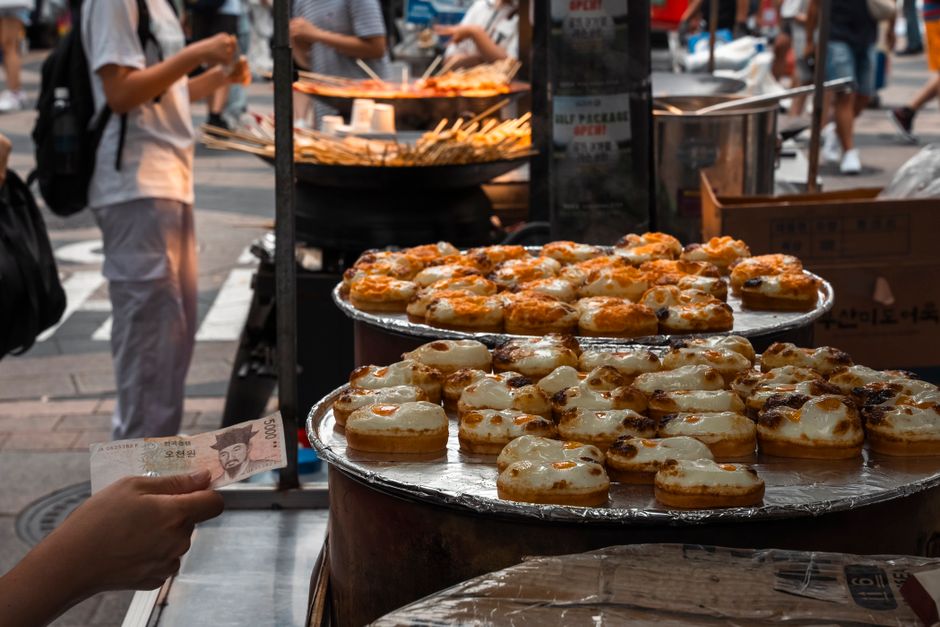
Hotteok (호떡) is the quintessential winter street snack: a chewy pancake filled with brown sugar, cinnamon, and ground nuts, cooked on a griddle and pressed flat so the filling caramelises. It is sold from carts and small street stalls, especially around subway exits, markets, and tourist districts. One piece costs around 1,500-2,500 KRW. Eat it immediately while it is hot; the sugar inside will burn your tongue if you bite too soon.
Bungeo-ppang (붕어빵), fish-shaped pastries filled with sweet red bean paste or custard, appear in winter from street vendors using fish-shaped moulds over gas burners. They cost about 1,000-2,000 KRW each or three for 3,000 KRW. The name means carp bread, though they taste nothing like fish. Similar snacks include gyeran-ppang (egg bread), a warm, muffin-like bread baked with a whole egg on top.
Gun-bam (군밤), roasted chestnuts, are sold by weight from carts near markets and parks. The vendor roasts them in a large steel drum over charcoal, and the smell draws a crowd. Expect to pay around 3,000-5,000 KRW for a paper bag. Goguma (고구마), roasted sweet potatoes, are sold the same way. They are dry and starchy, best eaten with a hot drink.
Odeng (오댕) or eomuk, is processed fish cake on a skewer, simmered in a light anchovy-kelp broth at street carts. You take a skewer, eat it standing at the cart, and drink a paper cup of the broth to warm up. The broth is free; you pay per skewer, roughly 1,000-2,000 KRW each. This is a standard winter snack at traditional markets like Gwangjang Market (광장시장) in Seoul or Gukje Market (국제시장) in Busan.
Where to find winter dishes in major cities
Seoul has winter food in every neighbourhood, but some areas concentrate the options. Gwangjang Market in Jongno is known for bindaetteok (mung bean pancakes), mayak gimbap (mini seaweed rolls), and dozens of pojangmacha (포장마차) tents serving odeng and tteokbokki. Namdaemun Market (남대문시장) near Seoul Station has kalguksu (hand-cut noodle soup) and hotteok carts around the clothing alleys. Myeongdong (명동) has street food carts every evening along the main shopping streets. Hongdae (홍대) around Hongik University has budae-jjigae restaurants and late-night gopchang spots.
Busan's winter food culture focuses on seafood. Jagalchi Market (자갈치시장) near Nampo Station has raw fish on the ground floor and cooked seafood restaurants upstairs; many offer haemul-jjigae (seafood stew) or maeun-tang made with the catch of the day. Haeundae Beach (해운대) has jjamppong (spicy seafood noodle soup) restaurants and seafood jeongol near the traditional market behind the main road.
Jeonju in North Jeolla Province is known for kongnamul gukbap (콩나물국밥), a hangover soup made with bean sprouts, rice, and a light broth, served with side dishes including Jeonju-style bibimbap ingredients. The dish is specific to this region and costs around 6,000-8,000 KRW. The restaurants cluster in Jeonju Hanok Village (전주한옥마을) and near Jeonju Station.
Gangneung and Sokcho on the east coast specialise in squid and pollock, with sundae (순대, blood sausage) and soondubu (soft tofu) villages where multiple restaurants serve variations of the same dishes. In winter, these areas also serve hwangtae-guk (황태국), a dried pollock soup that is light, clear and mildly fishy.

Practical ordering and etiquette for winter meals
Most winter stews and hotpots are designed for sharing. If you are dining alone, look for restaurants that advertise ilインbun (일인분, single serving) or ask if they serve ddukbaegi portions. University areas and office districts near subway stations are more likely to accommodate solo diners. Use Naver Map or KakaoMap to check reviews in English; solo travellers often note whether the restaurant turned them away.
When the server brings a dish to the table on a portable burner, do not touch the burner controls. The server will adjust the heat or turn it off when the dish is ready. If you want the heat lowered or turned off, gesture or say 'bul kkeo juseyo' (불 꺼 주세요, please turn off the fire). Some restaurants leave the burner on low throughout the meal; others turn it off after the initial boil.
Banchan, the small side dishes, are unlimited. If you run out of kimchi or pickled radish, raise your hand or make eye contact with the server and point to the empty dish. They will refill it without charging extra. Do not wave your hand aggressively or call out loudly; a raised hand and brief eye contact are enough.
You will be given a spoon and metal chopsticks. Use the spoon for soup and rice; use the chopsticks for side dishes and solid ingredients in the stew. Do not lift the bowl to your mouth; it is too hot, and it is not the custom. If a stew arrives in a heavy stone pot, do not touch the pot itself; it holds heat for fifteen to twenty minutes and will burn your hands.
Tipping is not customary. The price on the menu includes service. When you finish, take your receipt to the counter near the entrance and pay there. Some smaller restaurants operate on an honour system: you tell the owner what you ate, and they calculate the bill.

Common winter dishes, spice level, and typical cost
| Dish | Main ingredients | Spice level | Typical price (KRW) |
|---|---|---|---|
| Kimchi-jjigae (김치찌개) | Aged kimchi, pork or tuna, tofu | Medium to high | 7,000-10,000 |
| Doenjang-jjigae (된장찌개) | Soybean paste, tofu, vegetables | Low | 7,000-10,000 |
| Sundubu-jjigae (순두부찌개) | Soft tofu, seafood or pork, egg | Medium | 8,000-11,000 |
| Budae-jjigae (부대찌개) | Kimchi, sausage, Spam, noodles | Medium | 10,000-14,000 per person |
| Samgyetang (삼계탕) | Whole chicken, ginseng, glutinous rice | None | 15,000-20,000 |
| Seolleongtang (설렁탕) | Ox bone broth, beef slices, noodles | None (season yourself) | 9,000-12,000 |
Practical tips
Frequently asked questions
Before you go
Korean winter food is not subtle or light, and that is the point. If the forecast shows sub-zero temperatures and you want something that will keep you warm for the rest of the afternoon, order a jjigae or jeongol and eat it slowly while it bubbles at the table. If you are walking between neighbourhoods in the evening and need a quick reset, stop at a street cart for odeng and a cup of broth. The food culture assumes you are cold, assumes you want heat and salt and fat, and delivers exactly that. Check Naver Map before you go, carry cash for carts and small vendors, and expect larger portions than you are used to.


Comments
Post a Comment