Do I Need K-ETA to Enter Korea in 2026? 22-Country Exemption
If you hold a passport from the United States, Canada, the United Kingdom, Australia, New Zealand, Japan, or fifteen other specific countries, you do not need K-ETA to enter South Korea for tourism or business in 2026. From 1 January to 31 December 2026, nationals of exactly 22 countries are temporarily exempt from the Korea Electronic Travel Authorization requirement for short visa-free stays. However, you will still need to complete a different form—the e-Arrival Card—within three days before you land. This guide explains who needs K-ETA and who doesn't, what the e-Arrival Card is, how to complete it, and what happens if you get it wrong at immigration.

- K-ETA requirement 2026
- 22 countries exempt for all of 2026; others must apply and pay before travel
- e-Arrival Card
- Required for K-ETA-exempt travellers; submit online within 3 days before arrival at e-arrivalcard.go.kr
- K-ETA fee
- Check the official K-ETA site for current fee; paid online during application if required
- Exemption validity
- Temporary exemption runs 1 January to 31 December 2026 only; rules may change in 2027
- Processing time
- K-ETA usually approved within 24-72 hours if required; apply well before your flight
- Which countries are exempt from K-ETA in 2026
- What K-ETA is and who still needs it
- The e-Arrival Card and how to submit it
- What happens at Korean immigration if you arrive without the right paperwork
- How to check your own country's status and avoid confusion
- Practical tips for first-time visitors completing the e-Arrival Card
- When and how to apply for K-ETA if you need it
- K-ETA vs e-Arrival Card: which form you need in 2026
- Practical tips
- Frequently asked questions
Which countries are exempt from K-ETA in 2026
The temporary exemption applies to nationals of exactly 22 countries: the United States, Canada, the United Kingdom, Germany, France, Italy, the Netherlands, Spain, Poland, Sweden, Finland, Norway, Belgium, Denmark, Austria, Japan, Taiwan, Hong Kong, Macao, Singapore, Australia and New Zealand. If you hold a passport from any of these countries and are visiting South Korea for tourism, business meetings, family visits or transit for up to 90 days without a visa, you do not need to apply for K-ETA during calendar year 2026.
This is a closed list. Several countries that are often grouped with Western Europe or the English-speaking world are not on it. Ireland, Portugal, Switzerland, Greece, the Czech Republic, and many other European Union member states are not included in the 2026 exemption. If your country is not named above, you still need K-ETA. Do not assume that because your country is visa-exempt or part of the EU, you are also K-ETA-exempt—the lists are different.
The exemption is explicitly temporary. It was introduced for 2026 only, and the Korean government has not yet announced whether it will continue into 2027. If you are planning a trip in late 2026 or early 2027, check the official K-ETA website at k-eta.go.kr closer to your departure date to confirm the current rules. Immigration policy can change with little notice, and this exemption could be extended, modified or ended altogether.
What K-ETA is and who still needs it
K-ETA, or Korea Electronic Travel Authorization, is a pre-travel screening system introduced in 2021. It is not a visa. It is an additional layer of background checks for travellers from countries that do not need a visa to enter South Korea for short stays. The system collects your passport details, travel history, and answers to security questions, and immigration officials review your application before you board your flight. Approval is usually granted within 24 to 72 hours, though it can take longer during peak travel periods.
If your country is not on the 22-country exemption list, you must apply for K-ETA before you fly. This includes nationals of many European countries such as Ireland, Portugal, Switzerland, Greece, the Czech Republic, Romania, and others who can enter Korea visa-free but are not exempt from K-ETA. The application is completed entirely online at k-eta.go.kr. You will need a valid passport with at least six months remaining, a digital passport photo, a credit or debit card to pay the application fee, and an email address to receive your approval notification.
The K-ETA approval, once granted, is valid for two years from the date of issue and allows multiple entries into South Korea during that period, as long as each stay is within the visa-free limit (typically 90 days for most nationals, though some countries have shorter limits). If your K-ETA is denied, you will need to apply for a visa at a Korean embassy or consulate instead. Denial is uncommon but can happen if there are discrepancies in your travel history, criminal records, or previous immigration violations.
The e-Arrival Card and how to submit it
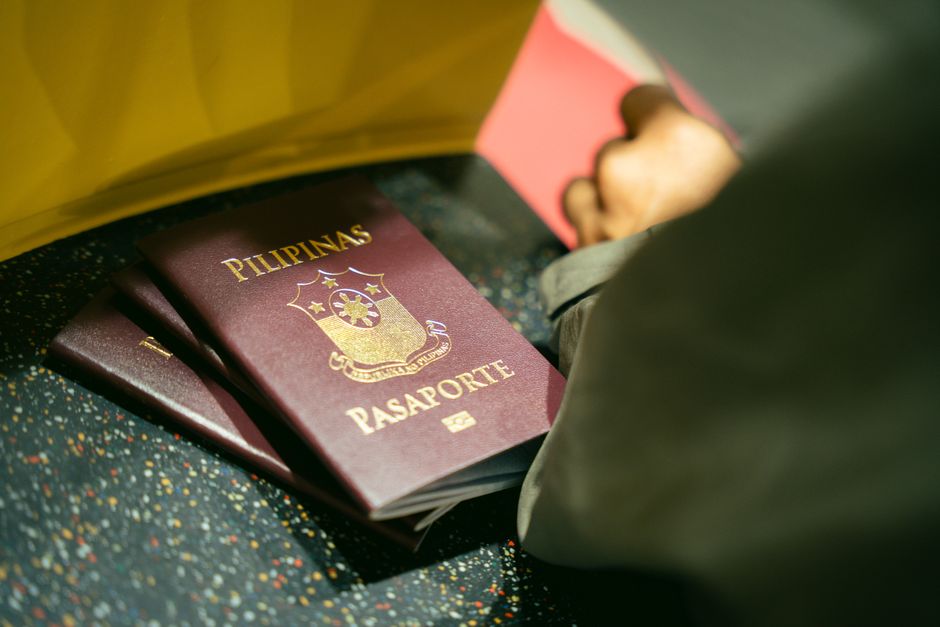
Since 1 January 2026, South Korea replaced the paper arrival and customs declaration cards with a single electronic form called the e-Arrival Card. If you are entering Korea without a valid K-ETA—which includes almost all Western tourists in 2026 because of the exemption—you must submit the e-Arrival Card online within three days before your arrival. You complete it at e-arrivalcard.go.kr.
The form asks for your passport details, flight information, accommodation address in Korea, the purpose of your visit, and answers to health and customs questions such as whether you are carrying restricted goods, amounts of cash over certain thresholds, or agricultural products. You will also declare any items you need to pay duty on. The system generates a QR code once you submit the form. Save a screenshot or print a copy of this QR code—you will show it to immigration and customs officers when you land.
If you hold a valid K-ETA approval, you do not need to submit the e-Arrival Card. The K-ETA system already collected your details, and immigration will pull that information when you arrive. However, because most Western travellers are K-ETA-exempt in 2026, the e-Arrival Card is the form they actually need. Do not confuse the two systems. If you are exempt from K-ETA, you must do the e-Arrival Card. If you have K-ETA, you skip the e-Arrival Card.
You can submit the e-Arrival Card from a computer or smartphone. The website has an English interface. Fill it out accurately—mismatches between your form and your passport or flight details can cause delays at immigration. If you make a mistake, you can submit a corrected version before you land, and the system will use the most recent submission.
What happens at Korean immigration if you arrive without the right paperwork
If you arrive at Incheon International Airport (인천국제공항), Gimpo International Airport (김포국제공항), or another Korean port of entry without having submitted the e-Arrival Card and you do not have a valid K-ETA, you will be directed to a separate queue or desk to complete the form on arrival. This can add 30 minutes to an hour to your processing time, especially during peak hours when flights from North America, Europe and Southeast Asia arrive in clusters. Immigration staff will help you, but the process is slower, and you may miss your onward transport connection if you have a tight schedule.
If you are from a country that requires K-ETA and you did not apply before your flight, you will be denied boarding by your airline. Airlines check K-ETA status during check-in for passengers from countries that need it. If you somehow board without K-ETA and arrive in Korea, immigration will refuse entry and you will be sent back on the next available flight at your own expense. This is rare because airlines are vigilant, but it is not impossible if you transit through multiple airports or check in at a codeshare partner that does not have the Korean immigration database integrated.
If you are from one of the 22 exempt countries but you applied for K-ETA anyway before the exemption was announced or because you were unsure, your K-ETA approval is still valid and you can use it. In that case, you do not need to submit the e-Arrival Card. Immigration will process you using the K-ETA record. There is no penalty for having K-ETA when you did not strictly need it.

How to check your own country's status and avoid confusion
The single most reliable source for current K-ETA rules is the official government website at k-eta.go.kr. The site has an English version and a tool where you can select your nationality and see whether you need K-ETA or are currently exempt. Do not rely solely on travel blogs, forum posts, or even airline staff for this information—immigration rules change, and only the official site is updated in real time.
If you hold dual citizenship or more than one passport, you must enter Korea using the same passport you used to check in for your flight and the same passport you declare on your e-Arrival Card or K-ETA application. If one of your nationalities is on the exempt list and the other is not, use the exempt passport for the entire journey to avoid needing K-ETA. You cannot switch passports mid-process without causing immigration system errors and delays.
Some travellers confuse K-ETA with visa-free entry or assume that because they do not need a visa, they also do not need K-ETA. This was never true for most countries, and even in 2026 it is only true for the 22 named countries during the temporary exemption period. Visa-free entry means you do not need to visit a Korean embassy before you travel; K-ETA is a separate online screening. They are two different things, and both lists are maintained separately.
If you are booking a multi-country trip and entering Korea more than once, or if your trip spans late December 2026 and early January 2027, pay close attention to the exemption end date. The 2026 exemption is valid only until 31 December 2026. If you plan to enter Korea on or after 1 January 2027, the exemption may not apply, and you may need K-ETA again. Check the official site in late 2026 for any updates or extensions.
Practical tips for first-time visitors completing the e-Arrival Card
When you fill out the e-Arrival Card, have your flight details, accommodation address, and passport in front of you. The form asks for your Korean address—this is the hotel, hostel, or Airbnb where you will stay on your first night. If you are staying at multiple places, list the first one. The system does not verify the booking, but immigration officers may ask to see a confirmation email or booking screenshot if there is any question, so have that accessible on your phone.
The customs section asks whether you are bringing in more than USD 10,000 in cash or equivalent, whether you are carrying restricted items such as fresh fruit, meat, plants, or counterfeit goods, and whether you have items to declare for duty purposes. Most tourists answer no to all of these. If you are carrying medication, small amounts for personal use are generally fine, but if you are bringing more than a few weeks' supply or anything containing controlled substances, check the Korean Customs Service website or contact them before you travel. Some common medications in other countries are restricted or banned in Korea.
Save the QR code you receive after submitting the e-Arrival Card as a screenshot on your phone and also email it to yourself as a backup. Airport Wi-Fi can be congested, and you do not want to be searching for the email or struggling to load the website when you are in the immigration queue. Immigration officers will scan the QR code at the booth, and customs will check it again when you collect your bags and pass through the final checkpoint. You may also be asked to show the code if you are selected for a secondary inspection.

When and how to apply for K-ETA if you need it
If you are not from one of the 22 exempt countries, apply for K-ETA at least one week before your departure date. Most applications are approved within 24 to 72 hours, but some require additional review, especially if you have recently visited countries on Korean security watch lists, if your travel history is sparse, or if there are discrepancies in your application. Applying early gives you time to resolve any issues or, if your K-ETA is denied, to apply for a visa at a Korean consulate instead.
The application process requires you to upload a digital passport photo. This should meet standard passport photo requirements: plain background, no glasses, neutral expression, and recent. The file size and format requirements are listed on the site—usually JPEG or PNG under a certain file size. If your photo is rejected, you will need to upload a new one, which can delay approval.
You will also answer questions about your criminal history, deportation or entry refusal history, and infectious disease status. Answer truthfully. The Korean immigration system cross-references data with other countries, and a false declaration can result in denial, entry refusal, or a ban from future entry. If you have a criminal record but it is minor and old, you may still be approved, but lying about it is worse than disclosing it.
Once approved, your K-ETA is electronically linked to your passport number. You do not receive a physical document—just an email confirmation. Print a copy of the approval email or save it on your phone for your records, though immigration will see the approval in their system when they scan your passport. The approval is valid for two years, and you can enter Korea multiple times during that period without reapplying, as long as each stay is within the visa-free duration.

K-ETA vs e-Arrival Card: which form you need in 2026
| Your situation | K-ETA required? | e-Arrival Card required? | Where to apply |
|---|---|---|---|
| Passport from one of the 22 exempt countries, visiting in 2026 | No | Yes, within 3 days before arrival | e-arrivalcard.go.kr |
| Passport from exempt country, already have valid K-ETA from before | No (but existing K-ETA still works) | No, K-ETA holders skip this | Not applicable |
| Passport from a country not on the exempt list, visa-free eligible | Yes, apply before flight | No, K-ETA holders skip this | k-eta.go.kr |
| Passport from a country that requires a visa to enter Korea | No, visa holders do not need K-ETA | Check with Korean consulate | Korean embassy or consulate |
| Dual citizen: one passport exempt, one not exempt | No, if you use the exempt passport | Yes, using the exempt passport | e-arrivalcard.go.kr |
Practical tips
Frequently asked questions
Before you go
If you hold a passport from the United States, Canada, the United Kingdom, Australia, New Zealand, or one of the other 17 countries on the exemption list, you do not need K-ETA to enter South Korea in 2026. You do, however, need to submit the e-Arrival Card online within three days before your arrival, and you should save the QR code to show at immigration and customs. If your country is not on the list of 22, apply for K-ETA at least a week before you fly. Always confirm your own nationality's current status on k-eta.go.kr, because the 2026 exemption is temporary and immigration rules can change.


Comments
Post a Comment